
Plumbago
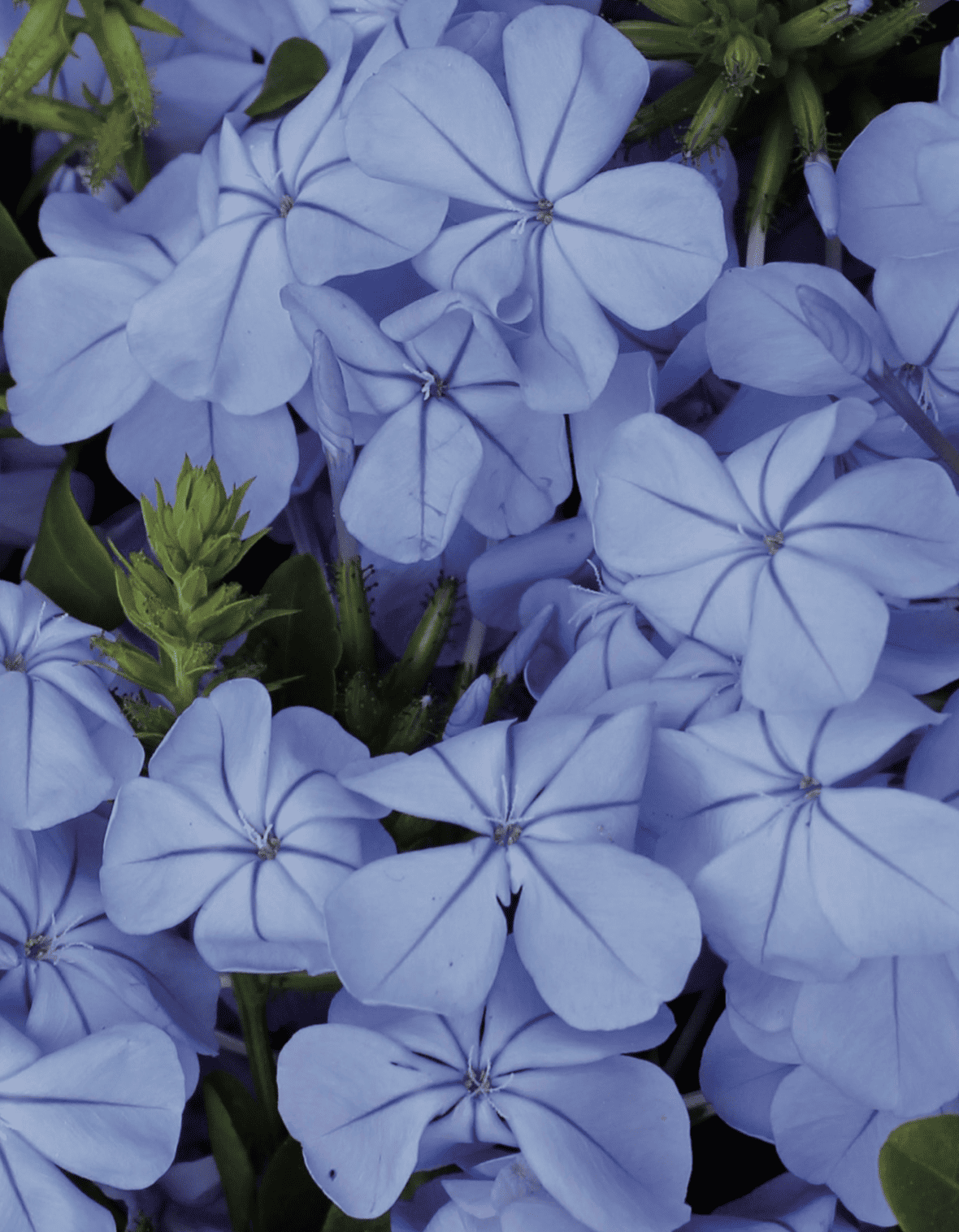
Plumbago: the climbing shrub with stunning sky-blue flowers that brighten gardens and terraces
Plumbago (Plumbago auriculata), also known as Cape Plumbago or Cape Leadwort, is an elegant climbing shrub native to South Africa. It is highly valued for its rapid growth and spectacular summer flowering.
Its greatest attraction is its abundant clusters of delicate sky-blue flowers, a rare and captivating colour in the world of ornamental plants. These blooms bring brightness and a refined Mediterranean charm to gardens, patios, terraces, and balconies.
Versatile and easy to grow, Plumbago can be trained as a climbing plant using pergolas, trellises, and fences for support, or allowed to grow freely as a graceful cascading shrub, perfect for creating elegant flowering bushes.
Thanks to its adaptability, it also performs exceptionally well in containers, making it an excellent choice for decorating sunny balconies and terraces. It thrives in full sun, warm temperatures, and well-ventilated locations, where it flowers continuously throughout the summer and often well into autumn.
As it is sensitive to frost and low temperatures, it is advisable to grow it in containers or provide winter protection in regions with cold winters.
With its abundant blue blooms, vigorous growth, and ease of cultivation, Plumbago is one of the most popular ornamental plants for anyone wishing to create an elegant, colourful outdoor space with a true Mediterranean character.
Technical Specifications
| Feature | Description |
|---|---|
| Botanical name | Plumbago auriculata |
| Common name | Plumbago, Cape Plumbago, Cape Leadwort |
| Family | Plumbaginaceae |
| Plant type | Climbing shrub |
| Origin | South Africa |
| Exposure | Full sun |
| Flowering period | Early summer through autumn |
| Flower colour | Sky blue |
| Preferred soil | Fertile, light, and well-drained |
| Watering | Moderate and regular |
| Cold hardiness | Limited |
| Container growing | Excellent |
| Growth rate | Fast |
How to Grow Plumbago
☀️ Light Exposure
Plumbago thrives in full sun and produces its best flowering display when it receives 6–8 hours of direct sunlight each day.
A bright, well-ventilated location encourages healthy growth and continuous flowering.
💧 Watering
During spring and summer, water regularly to keep the plant healthy.
Helpful tips:
- Water when the top layer of soil feels dry.
- Avoid waterlogged soil.
- Reduce watering during autumn and winter.
Once well established, Plumbago tolerates short periods of drought reasonably well.
🌱 Fertilizing
For abundant, long-lasting flowering:
- Feed every 15 days from March to September.
- Use a fertilizer formulated for flowering plants, preferably one rich in potassium and phosphorus.
✂️ Pruning
Light pruning is recommended at the end of winter or in early spring.
This helps to:
- Maintain a compact, tidy shape.
- Encourage vigorous new shoots.
- Promote even more abundant flowering.
🧊 Winter Protection
Plumbago is not frost-hardy.
In areas where temperatures fall below 5°C (41°F), it is advisable to:
- Grow the plant in a container for easy relocation.
- Move it to a cool greenhouse, enclosed porch, or another bright, sheltered location.
- Reduce watering during the dormant season.
Why Choose Plumbago?
💙 Spectacular sky-blue flowers, rare and highly ornamental
🌿 Fast and vigorous growth
🏡 Ideal for pergolas, fences, walls, patios, and terraces
🪴 Perfect for container growing
☀️ Thrives in sunny, Mediterranean-style gardens
🌸 Blooms for many months with minimal maintenance
Botanical Curiosity
Although Plumbago is sometimes called Blue Jasmine, it does not belong to the true jasmine family. Its nickname comes from the delicate fragrance of its flowers and their beautiful blue colour. Thanks to its graceful growth habit and exceptionally long flowering season, Plumbago has become one of the most popular ornamental plants in Mediterranean gardens, where it creates stunning colour combinations alongside bougainvillea, oleander, lavender, and citrus trees.