
Dipladenia
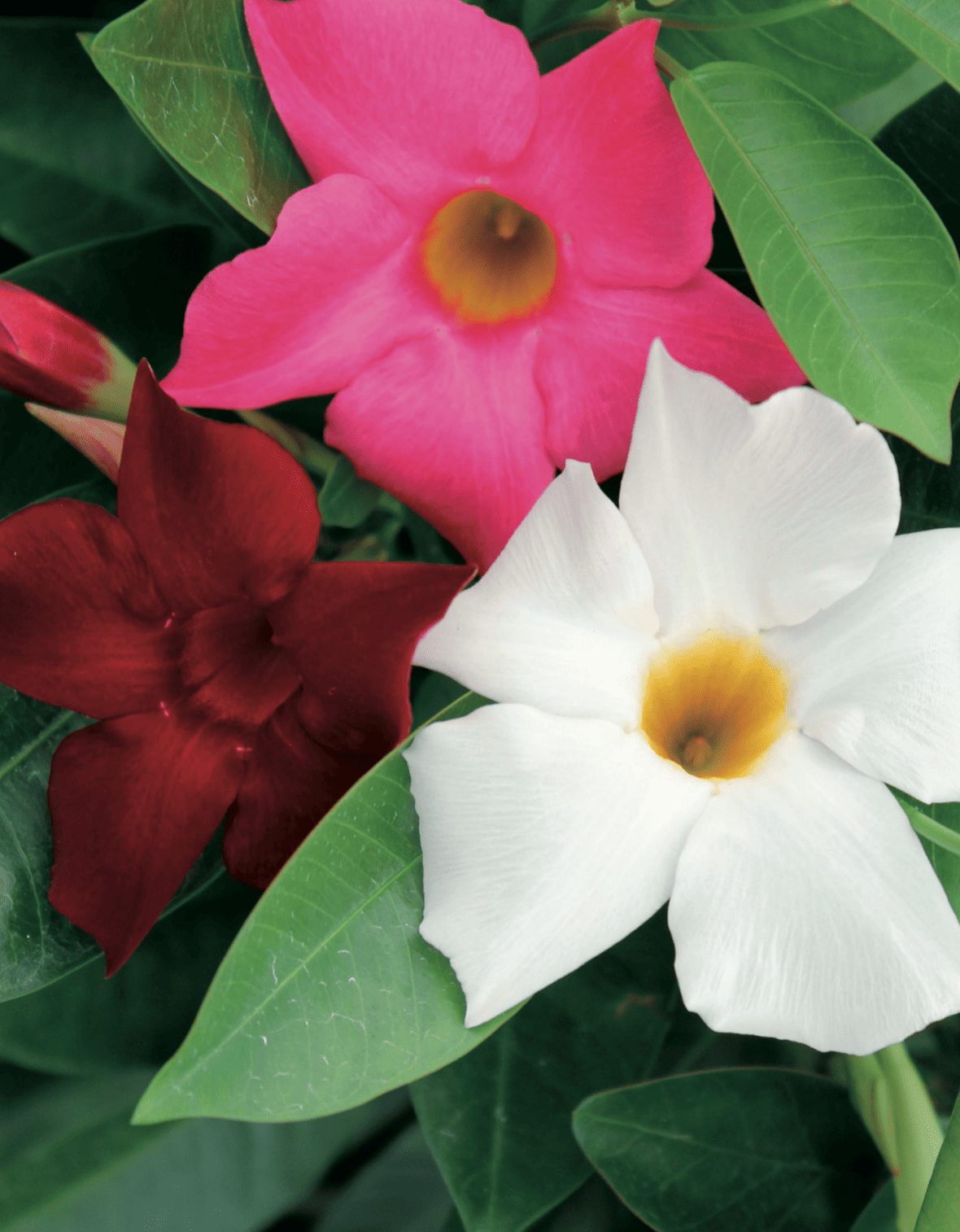
Dipladenia (Mandevilla): the evergreen climber with spectacular blooms
Dipladenia, also known by its botanical name Mandevilla, is a refined climbing plant native to South America that has become one of the most popular choices for balconies, terraces, and gardens throughout Europe in recent years.
Its greatest strength is its abundant and long-lasting flowering, which begins in spring and continues until late autumn. Its elegant trumpet-shaped flowers, available in beautiful shades of red, pink, and white, bloom profusely among its dense, glossy deep green foliage, creating a stunning ornamental display.
Thanks to its fast-growing habit, Dipladenia is ideal for decorating pergolas, trellises, fences, railings, and plant supports, quickly transforming any outdoor space into a vibrant corner filled with colour and natural beauty.
It thrives in bright locations and full sun, conditions that encourage vigorous growth and continuous flowering. Easy to grow and highly tolerant of heat, Dipladenia is nevertheless sensitive to cold temperatures. As the first frosts approach, it should be moved to a sheltered location or grown in containers to make winter protection easier.
Elegant, resilient, and exceptionally floriferous, Dipladenia is the perfect ornamental plant for anyone seeking months of vibrant colour and beauty with minimal maintenance.
Dipladenia Technical Specifications
| Feature | Description |
|---|---|
| Botanical name | Mandevilla (Dipladenia) |
| Family | Apocynaceae |
| Plant type | Evergreen climbing vine |
| Origin | South America |
| Exposure | Full sun or bright partial shade |
| Flowering period | Spring through late autumn |
| Flower colours | Red, pink, white |
| Preferred soil | Fertile, light, and well-drained |
| Watering | Regular but moderate |
| Cold hardiness | Low |
| Container growing | Excellent |
| Growth rate | Fast |
How to Care for Dipladenia
☀️ Light Exposure
For abundant flowering, Dipladenia prefers a bright location with at least 6 hours of direct sunlight per day. In particularly hot climates, it benefits from light shade during the hottest part of the afternoon.
💧 Watering
During spring and summer, keep the soil slightly moist without overwatering.
Helpful tips:
- Water when the top few centimetres of soil feel dry.
- Avoid waterlogged soil, which can lead to root rot.
- Reduce watering during autumn and almost suspend it throughout winter.
🌱 Fertilizing
To support its long flowering season:
- Feed every 10–15 days from March to September.
- Use a liquid fertilizer formulated for flowering plants, preferably one rich in potassium and phosphorus.
✂️ Pruning
At the end of winter or in early spring, remove dead or excessively long stems to encourage compact growth and abundant new flowering.
🧊 Winter Protection
Dipladenia is sensitive to cold and cannot tolerate frost.
When temperatures fall below 7–8°C (45–46°F), it is advisable to:
- Move the plant to a conservatory, cool greenhouse, or another bright, sheltered location.
- Reduce watering during its dormant period.
Why Choose Dipladenia?
✅ Continuous flowering from spring through autumn
✅ Elegant evergreen foliage
✅ Fast and vigorous growth
✅ Ideal for balconies, terraces, pergolas, and fences
✅ Easy to grow, even in containers
✅ Excellent tolerance to heat and full sun
Botanical Curiosity
Although it is still widely known as Dipladenia, its correct botanical name today is Mandevilla. Modern cultivars have been selectively bred to produce even more abundant flowering, improved heat tolerance, and a more compact growth habit, making them among the most popular ornamental plants for decorating outdoor spaces throughout the warm season.